Posted by: gaiatahoe | January 1, 2014

California Water Transfers and Drought Preparedness

See on Scoop.itClimate Impacts

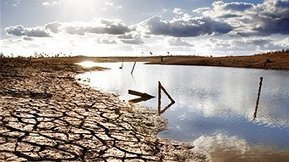
Imperial Valley California News, including Brawley, El Centro, Calexico, Holtville, Dunes, San Diego, Palm Springs (CA DFA Sec Ross “looking at scenarios in which considerable land fallowing & groundwater overdraft will occur” #water

See on www.imperialvalleynews.com

See on Scoop.itClimate Impacts

From the Huffington Post (Nick Visser): Climate change may be far worse than scientists thought, causing global temperatures to rise by at least 4 degrees Celsius by 2100, or about 7.2 degrees Fahr…

See on coyotegulch.wordpress.com

Posted by: gaiatahoe | January 1, 2014

RealClimate: Sea-level rise: What the experts expect

See on Scoop.itClimate Impacts

RealClimate: In the long run, sea-level rise will be one of the most serious consequences of global warming. But how fast will sea levels rise? Model simulations are still.

See on www.realclimate.org

See on Scoop.itClimate Impacts

KQED (blog)
2013: Progress, But Long Road Ahead to California Climate Goals
KQED (blog)
2013 was a pivotal year for California’s efforts to confront the increasingly ominous threats from climate change.

See on blogs.kqed.org

See on Scoop.itClimate Impacts

The Guardian
Experts say the IPCC underestimated future sea level rise
The Guardian
It looks like past IPCC predictions of sea level rise were too conservative; things are worse than we thought.

See on www.theguardian.com

See on Scoop.itClimate Impacts

Australian researchers have found that extreme versions of the cyclical weather pattern El Niño — dubbed ‘super El Niños’ — will double in frequency under projected global warming scenarios, with repercussions for many countries across the globe.

El Niño is the weather phenomenon responsible for Australia’s climate of “droughts and flooding rains”. In an El Niño year, a band of warm ocean water rises off the coast of South America, expanding westwards across the Pacific Ocean and displacing colder waters. El Niño in Australia is associated with decreased rainfall.


Some years, such as 1982-83 and 1997-98, the El Niño effect was stronger than usual, with warmer water flowing in an unexpected way.

“These peculiar extreme El Niños were characterised by sea surface temperature anomalies moving eastward along the equatorial Pacific Ocean, with a current reversal,” said Dr. Agus Santoso, of the UNSW Climate Change Research Centre, one of the authors of the study.

Crop losses as a result of the 1983 super El Niño were worth US$12 billion in the USA alone.


In a collaborative effort, scientists from the national science agency CSIRO and the Australian Bureau of Meteorology used statistical modelling to uncover how global warming influences the super El Niño.


The team collected weather data to model various warming scenarios ranging in extremity, and used results to predict effects on El Niño cycles originating out of the tropical Pacific Ocean. They found that normal El Niño patterns intensified and occurred more frequently with increased global warming. The study was published in the journal Nature.

See on www.abc.net.au

Posted by: gaiatahoe | January 1, 2014

Sea Level Rise and Coastal Regions

See on Scoop.itClimate Impacts

A large percentage of the world’s population lives along a coastline at or near sea level. This means that even small increases in sea level can have significant societal and economic impacts through increased coastal erosion, susceptibility to storm surges, saltwater intrusion into groundwater, loss of coastal wetlands, and stresses on ecosystems and community infrastructure.

See on www.usgs.gov

See on Scoop.itClimate Impacts

Muñoz-Rojas, M., Jordán, A., Zavala, L. M., González-Peñaloza, F. A., De la Rosa, D., Pino-Mejias, R., and Anaya-Romero, M. 2013. Modelling soil organic carbon stocks in global change scenarios: a CarboSOIL application.

See on blogs.egu.eu

See on Scoop.itClimate Impacts

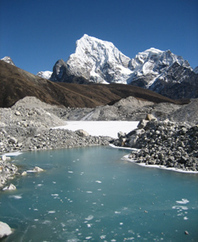
Researchers suspect soot from fires in India and China ‘probably’ responsible for a third of glacial retreat in Himalaya

See on www.rtcc.org

See on Scoop.itClimate Impacts

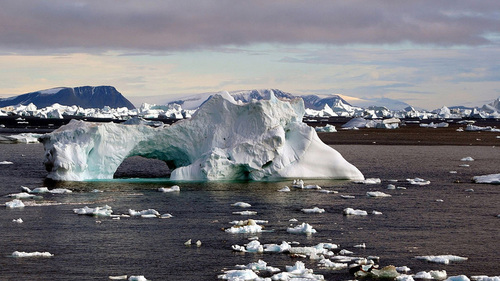
The Arctic may become ice free as soon as 2015, 85 years earlier than recent predictions, prompting a briefing of top U.S. government officials, including those from the Pentagon and the Department of Homeland Security, …

See on www.planetizen.com

« Newer Posts - Older Posts »

Categories